9 WhatsApp Marketing Software Solutions for Advanced Marketers
You picked the wrong WhatsApp tool once, and now your team is juggling spreadsheets, missed chats, and broken automations. Nine platforms claim to fix this, but most just add another dashboard to check.
This guide breaks down the nine WhatsApp marketing software options worth your time, starting with what to look for in a platform. By the end, you will have a clear #1 pick and the specific criteria to justify that choice to your team.
What to Look For in WhatsApp Marketing Software
Choosing the right WhatsApp marketing software hinges on a few non-negotiable features that directly impact your campaign success. The most critical factor is official WhatsApp Business API access, which ensures reliability and unlocks features that consumer apps simply cannot offer.
Bulk messaging capabilities must include proper opt-in consent management to keep your campaigns compliant and your sender reputation intact. Look for chatbot automation that handles instant responses, plus a clear process for message template approvals so your broadcasts actually get delivered.
Your tool should offer CRM integration for personalization, allowing you to segment contacts and tailor every message. An analytics dashboard for tracking performance is essential, covering delivery rates, read receipts, and click-through rates so you can refine your approach.
Finally, verify that the software respects GDPR and telemarketing laws, including opt-out management and end-to-end encryption. These compliance features protect your business and build trust with your audience.
1. Com.bot - Best Overall
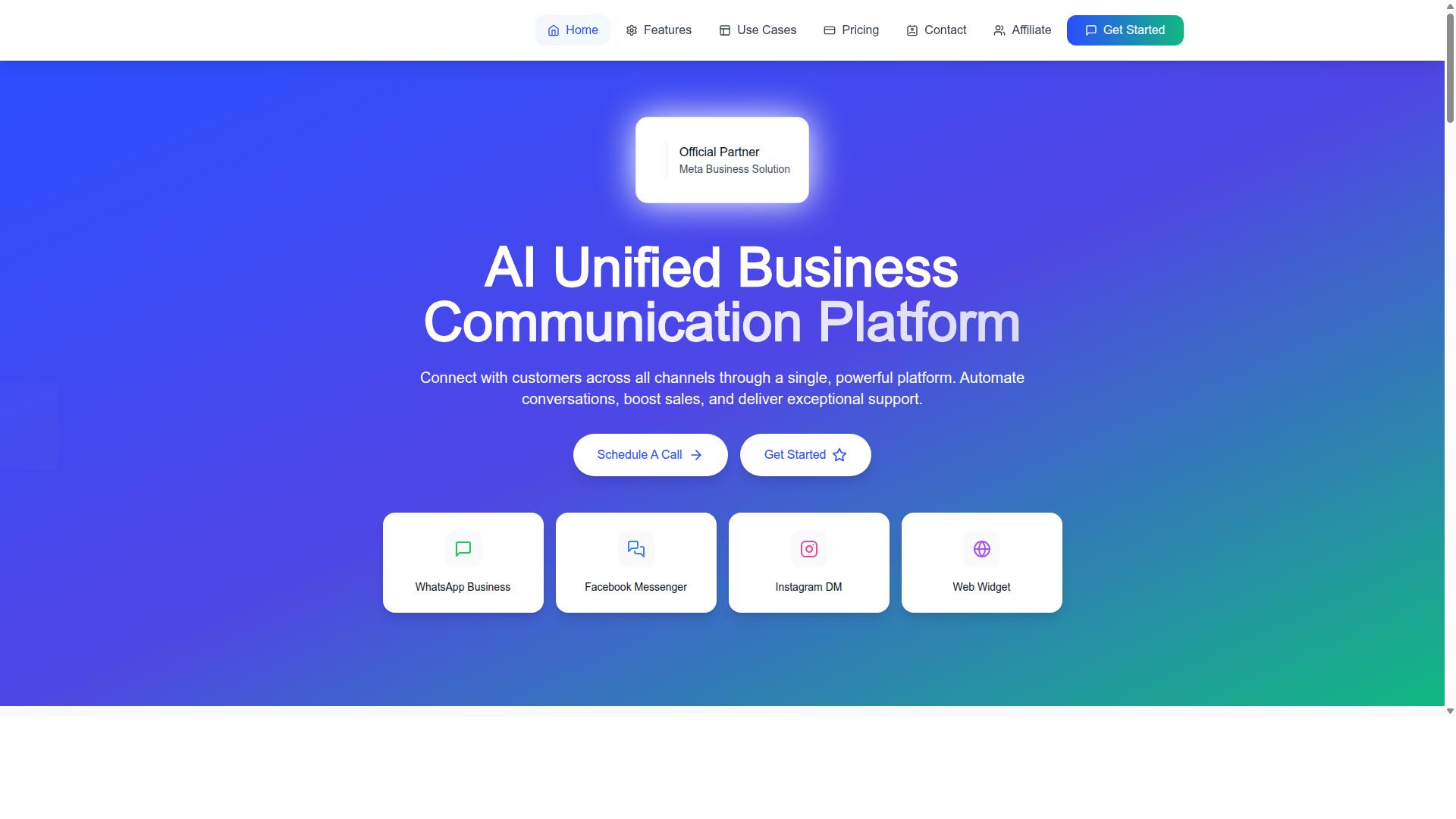
Com.bot stands out as the best overall WhatsApp marketing platform, combining robust automation with a unified team inbox. As an official Meta Business Partner, it brings enterprise-grade credibility to every conversation, making it a trusted choice for advanced marketers who need reliability at scale.
The platform processes over 25 million messages daily, which speaks to its infrastructure and real-world performance. This volume means the system handles high-throughput campaigns without breaking a sweat, so your bulk messaging and chatbot automation run smoothly even during peak periods.
WhatsApp Business API integration sits at the core of the platform, giving you access to official messaging features like message templates and rich media. You get a visual bot builder with a drag-and-drop interface, which lets you design complex conversation flows without writing a single line of code. This makes sophisticated chatbot automation accessible even for teams without dedicated developers.
Beyond WhatsApp, Com.bot supports Facebook and Instagram through its multi-channel approach. You can manage all three platforms from one place, which simplifies your omnichannel strategy and keeps your team focused on one inbox instead of juggling multiple tools.
Native Payments for WhatsApp transactions is a standout feature that many competitors lack. This allows you to collect payments directly within the chat flow, reducing friction for customers and speeding up your sales cycle. The automation builder connects with over 1,000 integrations, so your WhatsApp marketing can plug into your existing CRM and other essential tools.
Team collaboration gets real attention here with role-based access control. You can assign permissions, manage agents, and keep your multi-agent inbox organized even as your support team grows. Features like quick replies and saved replies help your agents respond faster, while label management keeps conversations sorted and trackable.
Com.bot also offers additional products that extend its utility beyond messaging. Tasks.Bot handles enterprise-grade task automation, Tickets.Bot manages event ticketing, and Calendars.Bot provides AI-powered appointment booking. Together, these tools create an ecosystem that covers far more than basic WhatsApp marketing.
The platform also includes bulk messaging, order updates, and smart notifications for customer support scenarios. Combined with a shared team inbox and analytics dashboards, you get a complete picture of your messaging performance. For advanced marketers who want a single partner for WhatsApp, social channels, payments, and workflow automation, Com.bot delivers the depth and scale that makes it the best overall choice.
2. Wati
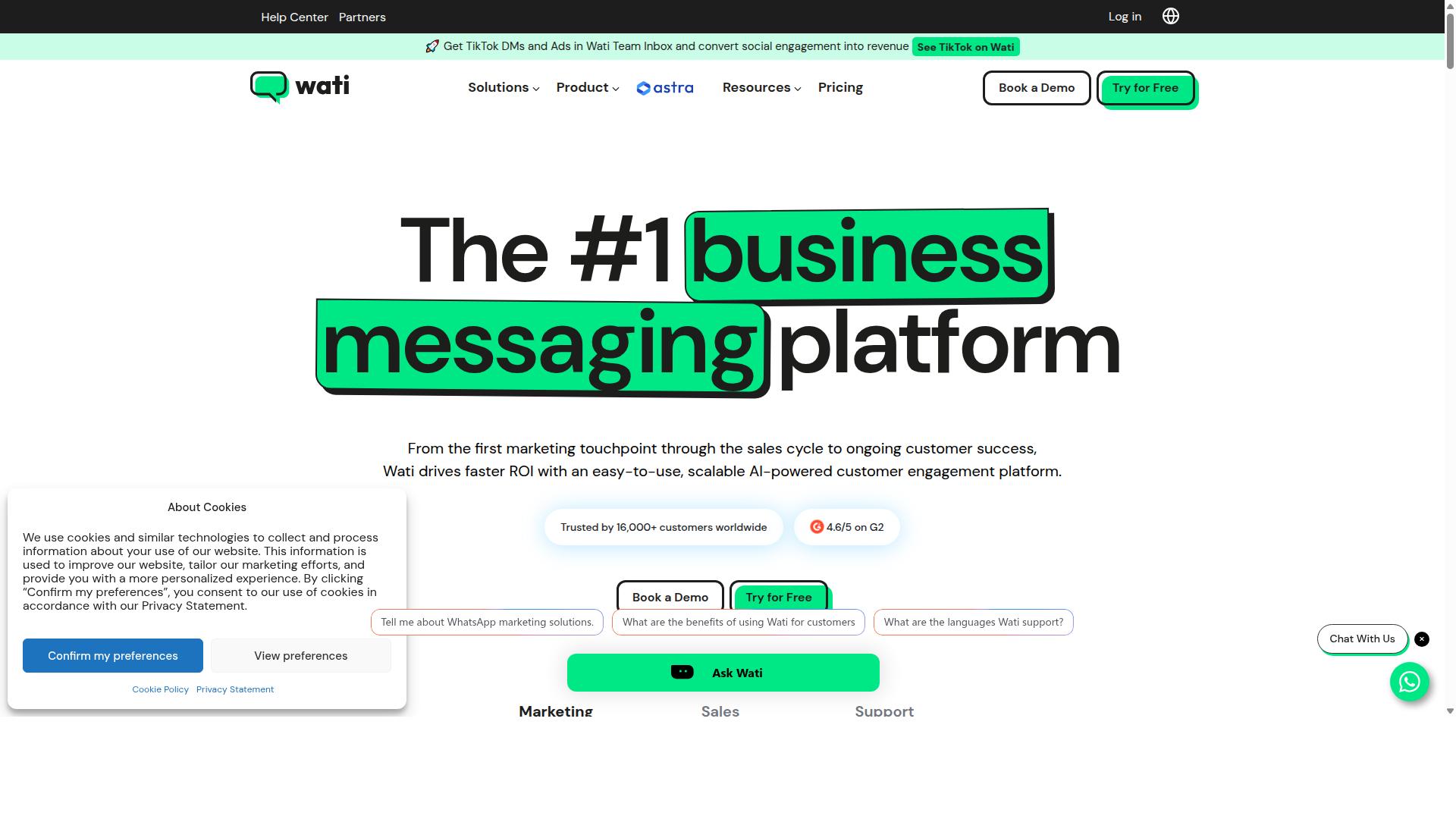
Wati is a solid alternative for businesses focused on conversational messaging and team collaboration. It is a WhatsApp marketing tool designed primarily for small and medium businesses that want to access the WhatsApp Business API without a steep learning curve. The platform is known for its fast onboarding process, which makes it an attractive option for teams that need to get campaigns running quickly.
Wati offers a shared team inbox that allows multiple agents to manage customer conversations from one place. This setup works well for support-heavy operations where response time matters. The platform also includes a chatbot builder for automating common inquiries, which helps reduce the manual workload on your support staff.
Broadcast lists are another core feature, letting you send bulk messaging campaigns to segmented contacts. Wati is noted for its broadcast campaign capabilities, though some users report occasional sync delays between the platform and WhatsApp. For most small business use cases, these delays are minor and do not significantly impact daily operations.
CRM integration is available, which means you can connect Wati to your existing customer database and keep conversation history in one place. Pricing starts from approximately $49 per month, according to public listings on G2, or from $59 per month when sourced through Brevo. This entry-level pricing makes Wati a cost-conscious choice for growing teams.
When comparing Wati to Com.bot in this buying guide, the main difference comes down to scope. Wati is best suited for small businesses that want straightforward automation and team collaboration tools. Advanced marketers who need deeper campaign management, more granular contact segmentation, and richer analytics may find that a more comprehensive platform fits their workflow better. Evaluate your team size and automation complexity before committing to either option.
3. Brevo
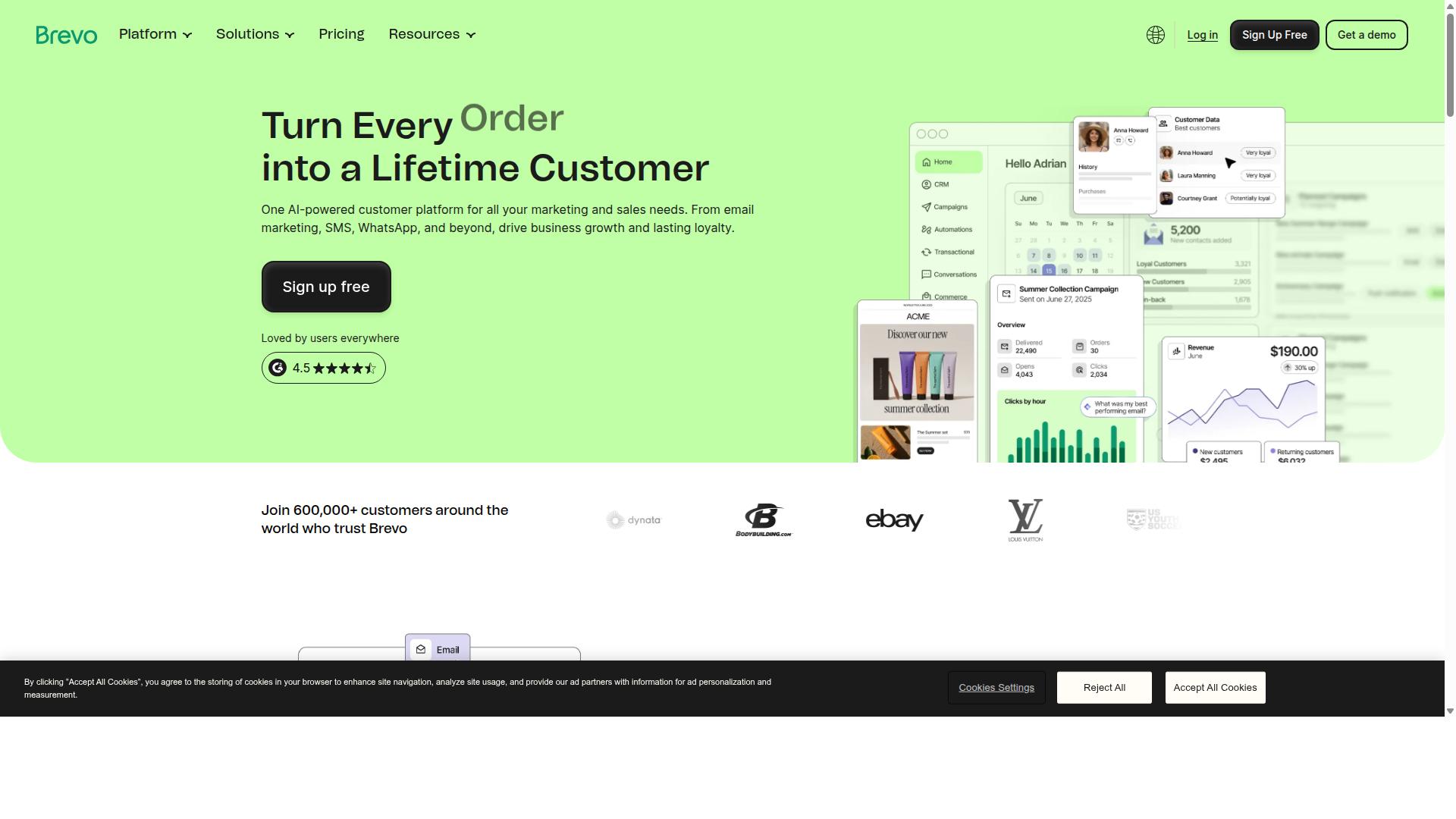
Brevo (formerly Sendinblue) is a versatile marketing platform that extends into WhatsApp for omnichannel campaigns. As an official Meta Business Partner and WhatsApp Business Solution Provider, it offers a credible path for brands looking to add messaging to an existing marketing stack.
The platform is best known for its email marketing, SMS, and chat capabilities. WhatsApp slots into this larger ecosystem rather than standing alone, which appeals to teams that want one hub for customer communication across channels.
For advanced marketers, the appeal lies in CRM integration and segmentation. Since Brevo tracks contacts across email, SMS, and WhatsApp, you can build broadcast lists based on behavior from any channel, not just messaging interactions.
Bulk WhatsApp campaigns run through the official API without requiring deep coding knowledge. The platform charges only for messages sent, and a free plan exists for teams still exploring their options.
Compared to dedicated WhatsApp platforms, Brevo takes a broader approach. You get message templates, click-to-WhatsApp ads support, and basic chatbot automation, but the real strength is how WhatsApp data feeds into the wider CRM picture.
This works best for marketers who already use Brevo for email and want WhatsApp as a complementary channel. Teams whose entire strategy revolves around WhatsApp alone might find dedicated tools offer deeper messaging-specific features.
4. Twilio
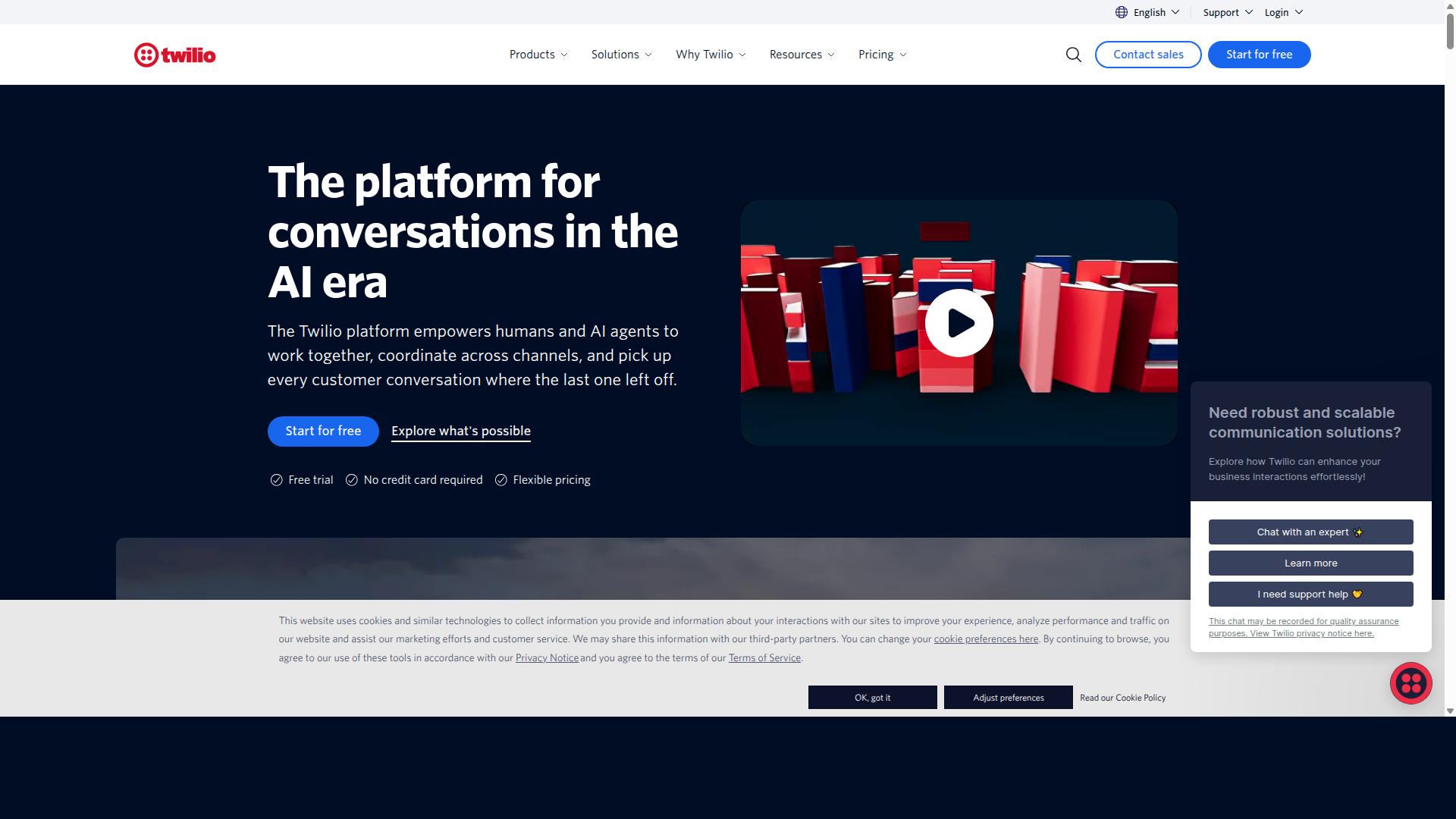
Twilio is the developer-first choice for WhatsApp Business API, offering unmatched flexibility and control. This platform is built for teams that live in code, not for marketers who want a plug-and-play dashboard.
With Twilio, you get full control over every aspect of your messaging pipeline. You can build custom automation flows, manage message templates at scale, and integrate WhatsApp directly into your existing CRM or backend systems.
The platform handles high-volume traffic reliably, which makes it a solid pick for enterprises with serious throughput demands. Delivery rates are generally strong because you are working directly with the official WhatsApp Business API infrastructure.
However, this power comes at a cost. Twilio requires coding skills to set up and maintain, so it is best suited for tech-savvy teams with dedicated developers on staff.
You will need to build your own chatbot logic, manage opt-in consent yourself, and design your own analytics dashboard from scratch. The usage-based pricing starts at $0.005 per message, and there is a free plan available for testing.
For advanced marketers who need granular control over message personalization, A/B testing, and contact segmentation, Twilio delivers. But if your team wants to skip the heavy engineering lift, a ready-made solution like Com.bot offers a more streamlined path to the same WhatsApp Business API.
5. Bird (formerly MessageBird)
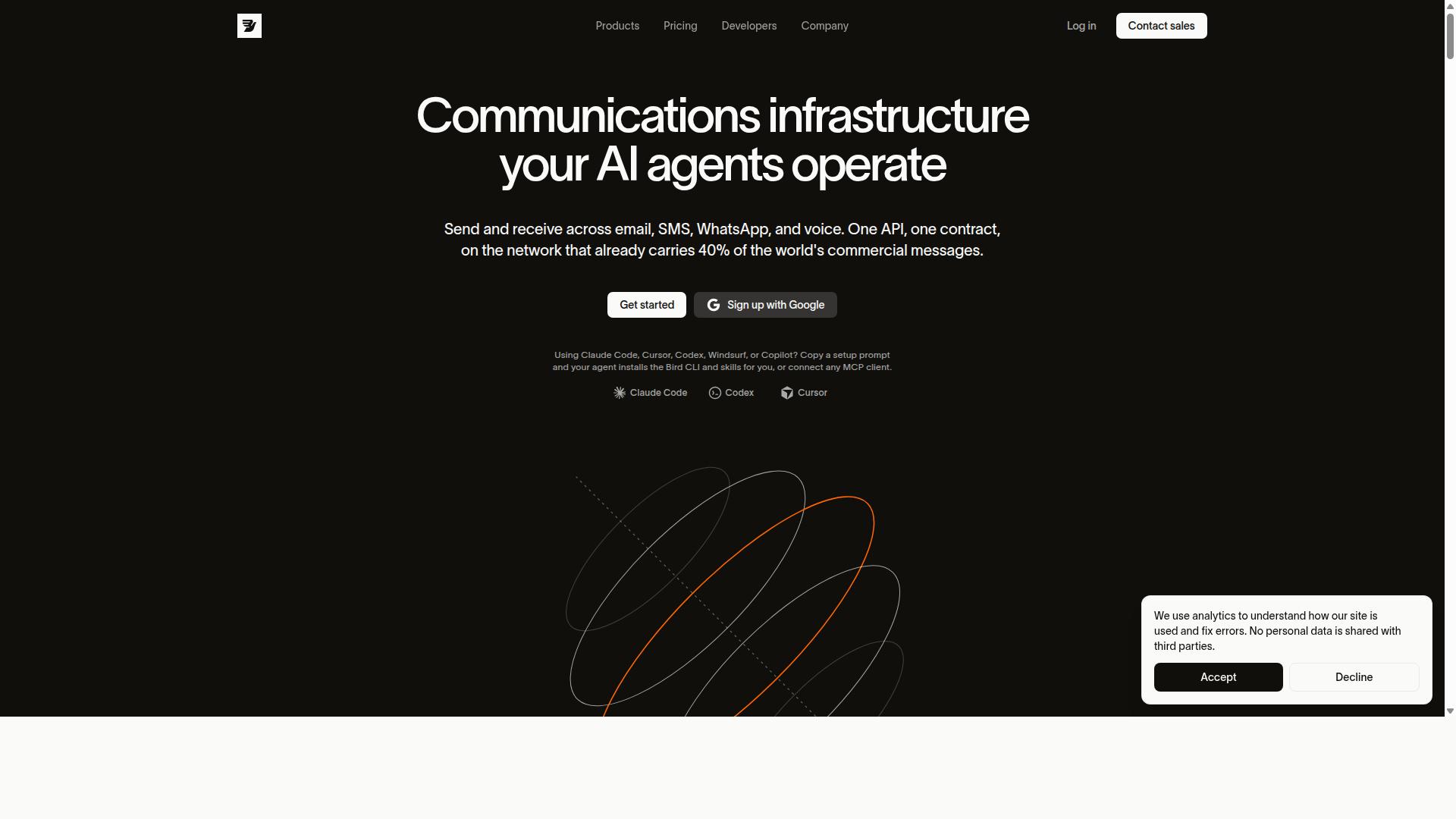
Bird (formerly MessageBird) offers a unified communications platform with strong WhatsApp capabilities. It sits at the enterprise end of the spectrum, built for teams that need reliable API access across many messaging channels at scale.
The platform supports WhatsApp alongside SMS, email, voice, and other channels, making it a solid choice for omnichannel outreach. Its API reliability is a major draw for developers who want programmatic control over message flows.
Bird includes an analytics dashboard that tracks delivery rates, read receipts, and response times across campaigns. Message templates, click-to-WhatsApp ads, and bulk messaging are all part of the package, with pricing starting from $0.005 per message.
That said, Bird is built for technical teams. Setting up campaigns often requires developer involvement, and the interface prioritizes flexibility over simplicity. For advanced marketers with engineering support, this trade-off works well.
Platforms like Com.bot take a different approach by focusing on a unified inbox that any team member can use immediately. Where Bird excels in raw API power, Com.bot shines in day-to-day usability for marketers who want to manage conversations without writing code.
6. WebEngage
WebEngage is a lifecycle marketing platform that uses WhatsApp for targeted, automated campaigns. It is best suited for enterprise brands that need omnichannel coordination across email, push notifications, SMS, and WhatsApp all in one place.
The platform is built around a journey builder and deep contact segmentation. Marketers can design multi-step drip campaigns that move users from first contact to repeat purchase without manual intervention at each stage.
WebEngage excels at retention-focused messaging. Teams can trigger WhatsApp messages based on user behavior, such as cart abandonment or post-purchase follow-ups, and then route engaged customers into broader lifecycle journeys that span multiple channels.
The platform includes A/B testing capabilities for message content and send timing. This helps advanced marketers refine their approach based on real response data rather than guesswork. Basic reporting is available, though teams that need granular, real-time analytics may find the depth limited.
Pricing is available on request, which signals a custom, enterprise-oriented sales model. For large brands with complex omnichannel needs, WebEngage provides a solid foundation.
That said, WhatsApp is one channel within a larger suite, not the core focus. A dedicated WhatsApp solution like Com.bot keeps messaging features front and center, which can mean faster implementation for teams whose priority is WhatsApp-first engagement.
7. respond.io
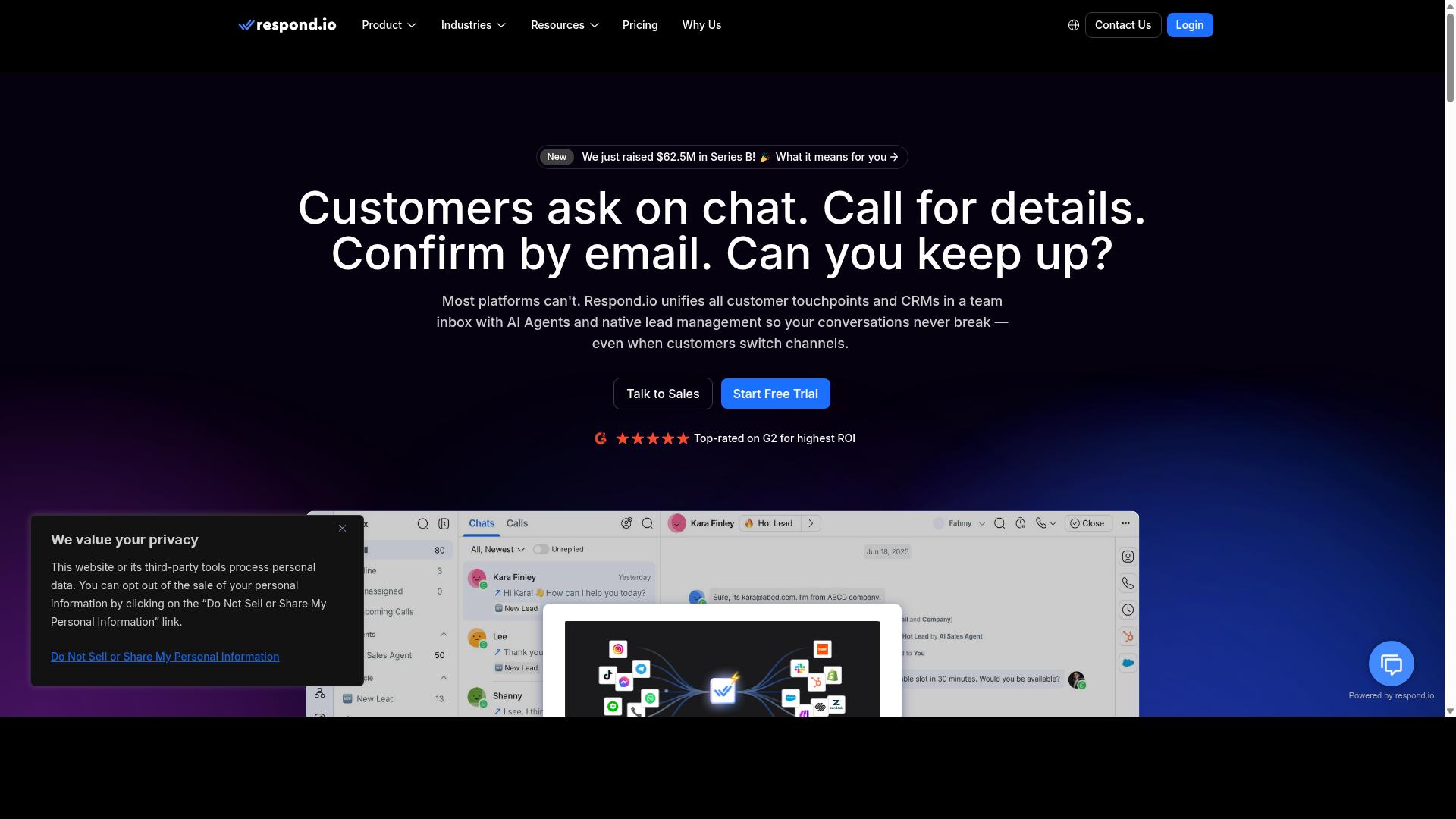
respond.io is a conversational management platform that excels in team collaboration and customer support ticketing. It centralizes customer conversations from WhatsApp and other channels into one organized workspace, making it a strong fit for support-heavy teams.
The platform is best known for its shared team inbox, which lets multiple agents handle the same conversation thread without confusion. Workflow automation and routing rules help direct messages to the right person, while quick replies and saved replies speed up repetitive responses.
respond.io focuses on customer support rather than marketing automation. If your goal is broadcast campaigns, drip sequences, or click-to-WhatsApp ads, this tool may feel limited. It is better suited for teams that need a reliable multi-agent inbox with label management and ticketing workflows.
Pricing starts around $29 per month according to public listings, though some sources cite roughly $79 per month depending on the plan tier. For advanced marketers who already have a dedicated marketing platform, respond.io works well as a support layer alongside their existing stack.
Compared to Com.bot's unified inbox, respond.io leans more heavily into support operations. Com.bot positions its inbox as part of a broader marketing toolkit, while respond.io keeps its focus on conversation management and team collaboration first.
8. ActiveCampaign
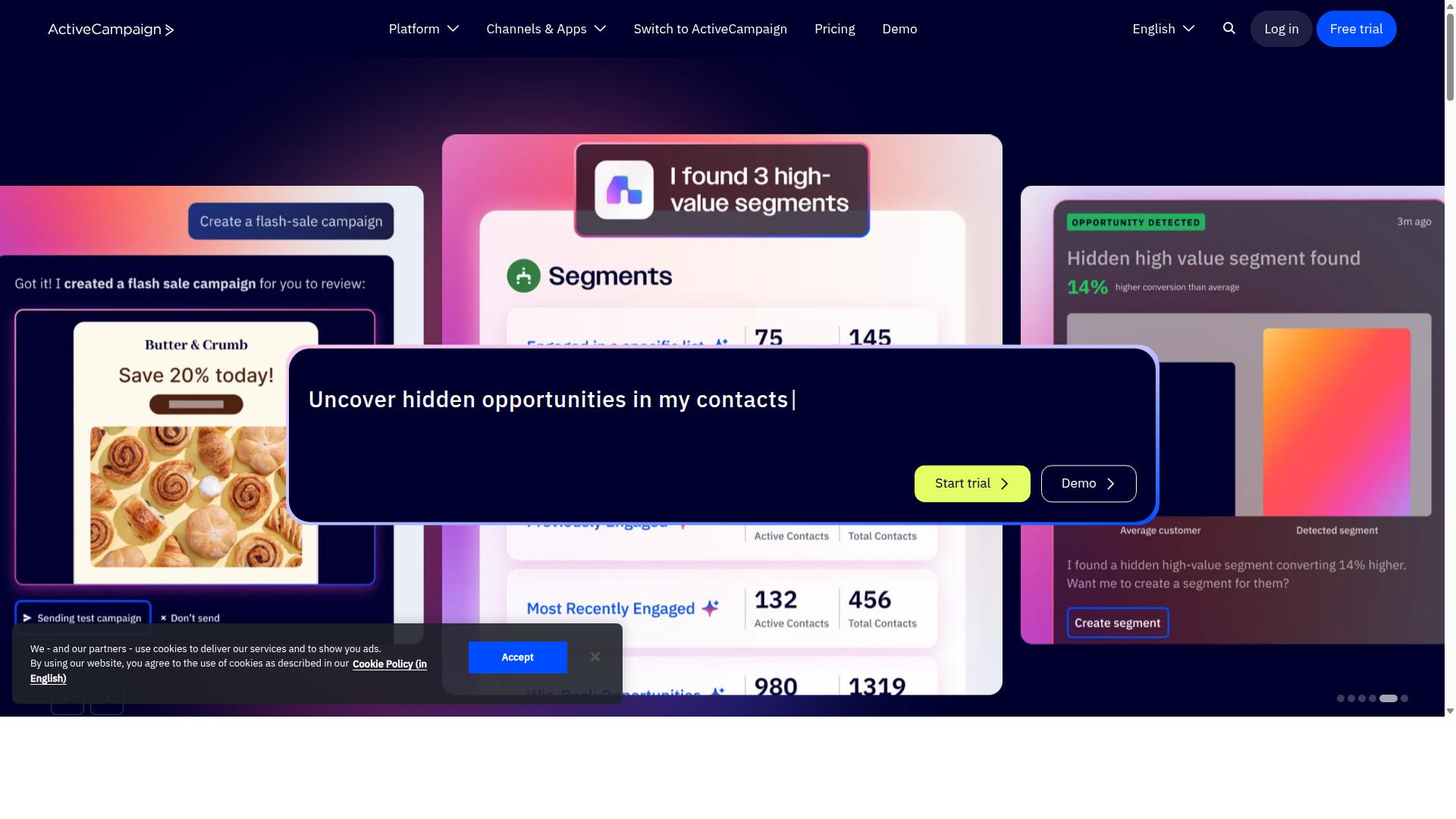
ActiveCampaign brings its powerful marketing automation and CRM to WhatsApp, enabling sophisticated customer journeys. This platform is best for multi-channel automation, where WhatsApp messaging integrates directly into CRM workflows, email automation, and complex marketing journeys for unified communication.
ActiveCampaign excels at lead nurturing and message personalization. You can build drip campaigns that move contacts through your funnel based on their behavior, and its A/B testing helps you refine message templates for better open rates and click-through rates.
The built-in CRM gives your team a full view of every contact. This makes it easier to align WhatsApp conversations with broader email and ad campaigns, all within one contact segmentation system.
However, ActiveCampaign comes with a steep learning curve. Setting up advanced automation and WhatsApp integration takes time, and the pricing starts from $15/mo with the WhatsApp add-on varying based on your needs.
For advanced marketers who already live inside a complex automation ecosystem, ActiveCampaign is a credible choice. But if you want a platform with dedicated WhatsApp features and an easier setup, Com.bot is designed to get you broadcasting and automating faster without the deep configuration work.
9. MoEngage
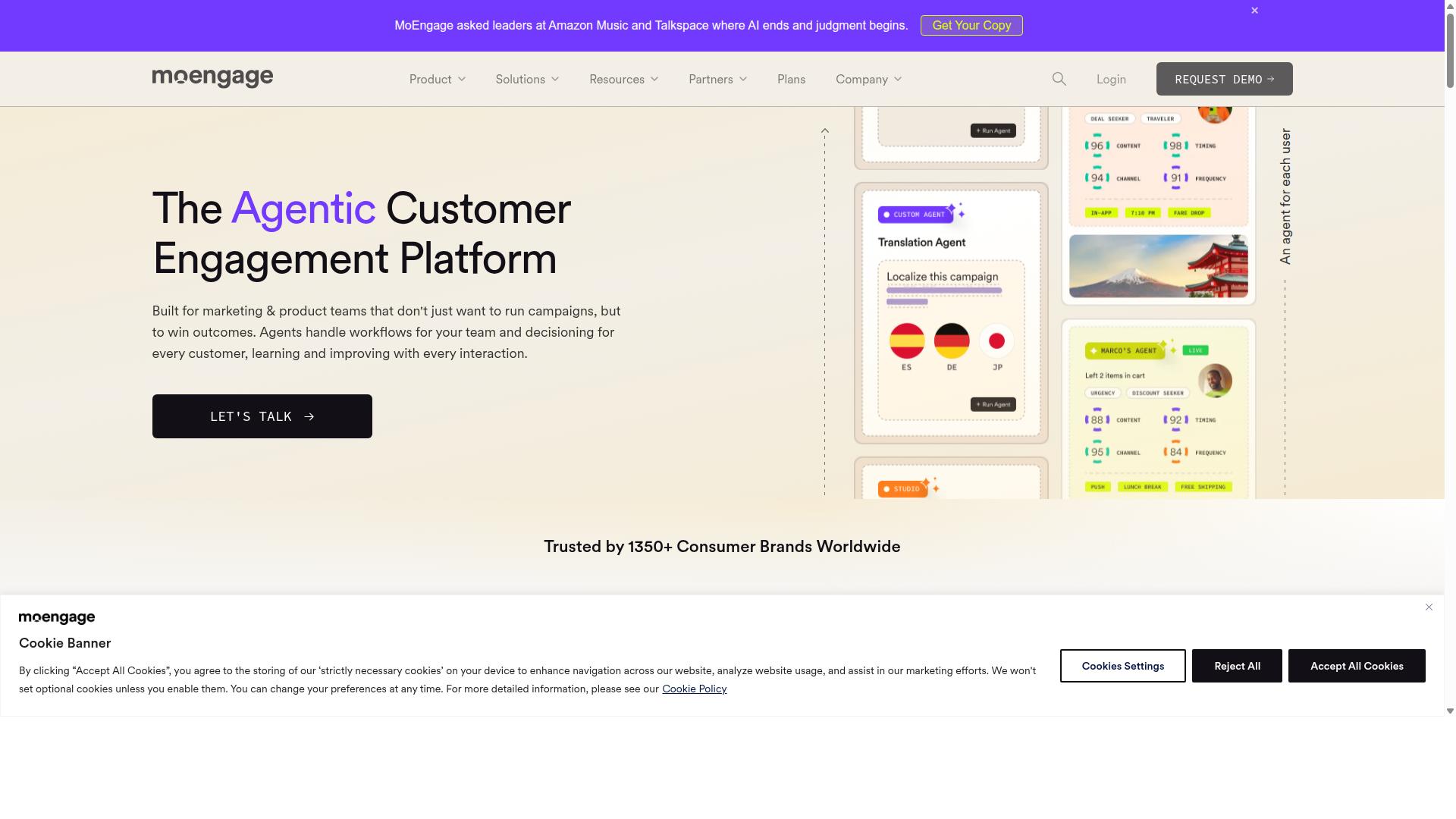
MoEngage is an engagement platform that leverages WhatsApp for personalized, data-driven campaigns. It is best suited for advanced marketers who need AI-powered personalization across multiple channels, not just messaging alone.
The platform uses predictive insights and AI to deliver hyper-personalized WhatsApp messages. These messages connect with push notifications, email, SMS, and in-app engagement, creating a unified view of each customer journey.
Its core strength lies in behavior targeting and automation. Marketers can trigger WhatsApp messages based on specific user actions, such as cart abandonment or browsing patterns. This makes it a strong choice for brands running complex lifecycle marketing programs.
However, MoEngage is a heavyweight tool designed for enterprise teams. The dashboard can feel cluttered, and pricing is custom, which means you will likely need a sales conversation before getting started. The learning curve is real, especially for teams used to simpler interfaces.
For marketers who want deep analytics and cross-channel orchestration, MoEngage delivers. But if your primary focus is WhatsApp alone, the extra layers of complexity may slow you down. Simpler platforms often handle bulk messaging and chatbot automation with far less setup friction.
When comparing platforms, consider how much of the feature set you will actually use. A unified, streamlined platform can get campaigns live faster than a sprawling suite where every channel demands configuration.
How to Choose the Right Option
Selecting the right WhatsApp marketing software depends on your team's technical skills, budget, and scale of operations. Start by mapping your actual workflow before you compare feature lists, because most tools look similar on paper but differ sharply in daily use.
Begin with a simple step-by-step approach. First, list your must-have features, then set a realistic budget, trial the top options, and finally evaluate each vendor's support quality.
Here is a practical decision framework to guide you through each stage.
Step 1: Define your must-have features. Write down the core tasks your team performs daily. Common priorities include bulk messaging, chatbot automation, CRM integration, and a multi-agent inbox for shared team responses.
Also consider advanced needs like click-to-WhatsApp ads, drip campaigns, A/B testing, and abandoned cart recovery. If your sales cycle depends on message personalization with rich media like images and videos, verify that each tool supports those formats natively.
Step 2: Set a budget based on team size. Pricing typically scales with agent seats, meaning the number of human operators who need access. A solo marketer can often use a cheaper tier, while a customer support team of 20 needs a plan built for volume.
Factor in hidden costs like setup fees, per-message charges, or overage penalties for exceeding broadcast limits. Com.bot suits businesses of all sizes, from SMBs to government bodies, so it is worth checking against your specific seat count during the trial phase.
Step 3: Trial options with real workflows. Do not just click around the demo. Run a genuine test that mirrors your busiest day, including bulk messaging, quick replies, saved replies, and label management inside the shared team inbox.
Test how the analytics dashboard reports delivery rates, open rates, click-through rate, and conversion tracking. If you rely on UTM parameters to measure campaign performance, confirm the tool surfaces that data without manual export work.
Step 4: Evaluate support and compliance. Check response time for support tickets and whether the vendor offers onboarding help. Compliance matters more than ever, so verify opt-in consent workflows, opt-out management, and alignment with GDPR and Telemarketing regulations.
For organizations handling sensitive communications, end-to-end encryption and message templates approved through the WhatsApp Business API are non-negotiable. Government bodies and enterprises often need multi-channel support across WhatsApp, Facebook, and Instagram, which is a core strength of Com.bot for those teams.
Ease of use versus developer flexibility is the final trade-off. Some tools are drag-and-drop simple but limit customization, while others expose APIs for deep integration. Decide which side your team leans toward before you commit.
If your marketing team is non-technical, prioritize a visual builder for chatbot automation and broadcast lists. If you have engineers on staff, look for robust API access and webhook support for custom workflows.
Finally, shortlist three tools that pass your feature and budget filters. Run each through the same trial scenario, then compare support quality and compliance documentation side by side. The right choice feels obvious once you have tested it against your real workload.
Final Verdict
After comparing the top platforms, Com.bot emerges as the best overall for its balance of power and ease of use. It combines the reliability of an official Meta Business Partner with the scale that advanced marketers actually need.
The numbers speak for themselves. Com.bot processes 25M+ messages per day for 23,000+ active customers, which means the infrastructure is battle-tested at enterprise volume. When your broadcast lists grow and your chatbot automation ramps up, you need a platform that won't buckle under load.
Security is another differentiator. Com.bot offers enterprise security with end-to-end encryption, which matters more than ever for compliance with GDPR and other data protection rules. You can run bulk messaging, click-to-WhatsApp ads, and drip campaigns without worrying about data exposure.
Beyond the core features, the ecosystem includes 100+ government bodies and 500+ global partners relying on the platform. That level of institutional trust is rare in the WhatsApp marketing space, and it validates the platform's approach to compliance and deliverability.
If you are evaluating WhatsApp Business API solutions for advanced use cases like CRM integration, contact segmentation, and conversion tracking, Com.bot is the safest bet. It delivers real-time message delivery with no markup on WhatsApp conversations, so your budgets go further.
Ready to see it in action? You can start with a free trial or contact the sales team directly to discuss your specific requirements. Visit com.bot to get started and put your WhatsApp marketing on autopilot.
Recommended Resources: